


An electrical engineer’s honest take on in-house versus outsourced maintenance — and the safety risks nobody is talking about.
Most articles about restaurant maintenance talk about one thing: money. How much does it cost to hire someone full-time versus calling a contractor when something breaks? That is a fair question. But as an electrical engineer who has walked through many commercial kitchens in this country, I want to raise a different concern first — one that almost never makes it into these conversations. Safety. Because the real question is not just who is cheaper. It is: who is qualified, and what happens when the wrong person touches the wrong thing?
The blind spot nobody talks about
Your kitchen is full of things that can hurt someone
A restaurant is not just a cooking space. It is an industrial environment — high heat, high-voltage equipment, gas lines, water, and electricity all sharing the same tight space. In Malaysia’s humid climate, this combination is especially unforgiving. Moisture gets into electrical panels. Grease coats exhaust fans and becomes a fire hazard. Old wiring, never meant for the load of today’s equipment, quietly overheats behind walls.
Real risk, not theory According to Malaysia’s Fire and Rescue Department (Bomba), commercial kitchen fires are among the leading causes of fire incidents in shophouses and food premises. A large number of these fires trace back to electrical faults and poorly maintained exhaust systems — both of which are maintenance failures, not cooking accidents.
Yet the maintenance conversation in most F&B circles stays focused on: “Can he fix the fridge?” or “Is the contractor cheap?” Rarely does anyone ask: “Is this person actually allowed to do this work?”
The legal side owners often miss
In Malaysia, not everyone is allowed to touch electrical work
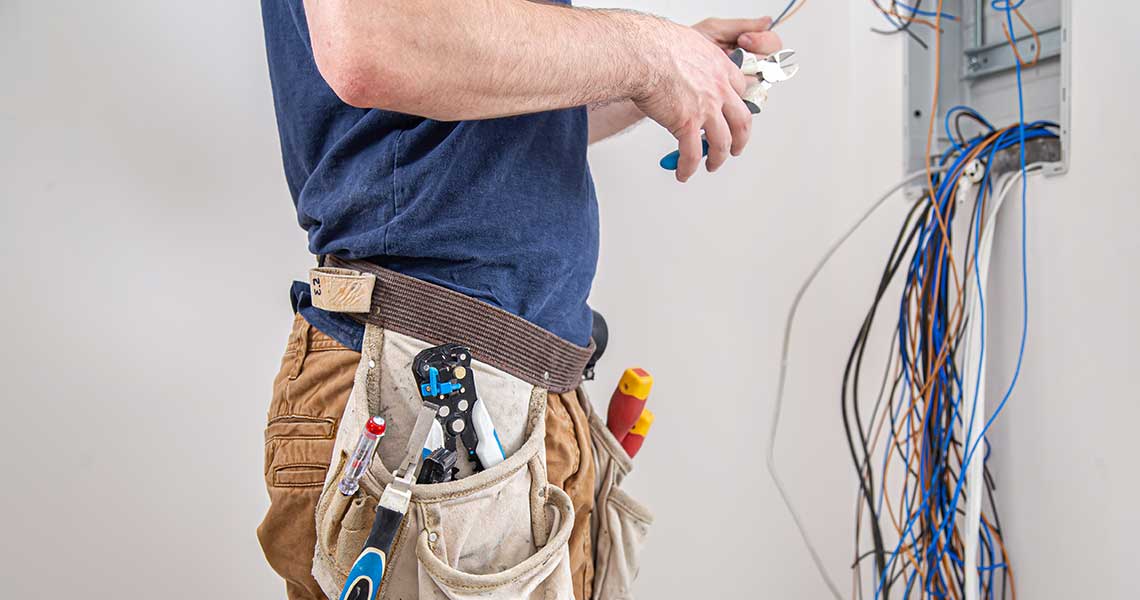
This is the part that surprises many restaurant owners. Under the Electricity Supply Act 1990 and regulations enforced by Suruhanjaya Tenaga (ST) — Malaysia’s Energy Commission — electrical installation, maintenance, and repair work in commercial premises must be carried out by a registered wireman or electrical engineer. It is not optional. It is the law.
What does this mean in practice? If you hire a general handyman — however capable he may seem — to rewire a faulty socket, replace a circuit breaker, or repair your walk-in chiller’s electrical panel, and something goes wrong, your insurance claim may be void. Worse, you could be held personally liable. The “uncle who knows how to fix things” is not a legal substitute for a licensed professional when it comes to electrical systems.
What to ask any maintenance worker before they start For electrical work: ask to see their Suruhanjaya Tenaga wireman licence (Permit A or Permit B). For gas-related work: check for a Suruhanjaya Tenaga gas pipe fitter registration or a SIRIM-recognised certification. These are not unreasonable requests — any legitimate contractor will have them ready.
Now, the money question
In-house or outsourced — what actually makes sense?
With safety as the baseline, let us look at the practical trade-offs honestly. Both models work — but for different types of operations, and only when done properly.
In-House Maintenance Staff
- Responds immediately when things break
- Knows your equipment well over time
- Can do daily checks and small fixes
- Fixed monthly salary — predictable cost
- Needs EPF, SOCSO, annual leave
- May not be qualified for all jobs
- Harder to justify for a single outlet
Outsourced Contractor
- Pay only when you need them
- Specialists for each type of work
- Provides service records & paperwork
- Response time can be slow
- Quality varies between vendors
- You must vet their licences yourself
- Good for small and growing outlets
“The assumption that in-house is always better because someone is ‘always there’ ignores a critical point — presence without the right qualification can make a problem worse, not better.”
What I see go wrong most often
Three common mistakes Malaysian restaurant owners make
1. Treating all maintenance as the same job. Changing a light bulb is not the same as replacing a faulty switch in your main electrical panel. Cleaning a floor drain is not the same as servicing a gas burner valve. Owners who hire one general maintenance person and expect them to handle everything are setting themselves up for trouble — not because the person is bad at their job, but because no single person is qualified for all of it.
2. Skipping preventive maintenance to save money. This is the most expensive mistake in the long run. A commercial refrigerator compressor that fails suddenly costs RM3,000 to RM8,000 to replace. The same unit, serviced every three months, will run for 10 to 15 years. Restaurant owners who only call someone when something breaks are not saving money — they are borrowing trouble.
3. Ignoring the exhaust and ventilation system. In Malaysia’s heat, kitchen exhaust is not a luxury — it is a fire prevention system. Grease builds up in ducting and hood filters every single week of operation. When it ignites, the fire travels through the duct straight into your ceiling. This is one of the most preventable disasters in the industry, and yet exhaust cleaning is one of the first things owners cut when looking to reduce costs.
A simple rule of thumb on exhaust systems If your kitchen runs more than 8 hours a day, your grease filters should be cleaned at least once a week, and your full duct system should be professionally cleaned every 3 to 6 months. Some insurers and local councils now require documented proof of this before renewing your fire insurance or food premises operating licence.
The smarter approach
The hybrid model — and why it works
After working with various food premises, my honest recommendation is this: do not treat it as a simple either-or choice. The smartest operators in Malaysia use a layered approach. They have one reliable person on-site — not necessarily a technician, but someone trained to spot warning signs early: unusual sounds from the compressor, a circuit breaker that keeps tripping, a gas smell that lingers. This person’s job is not to fix things. It is to notice things early and call the right person before small problems become expensive ones.
For actual repairs and servicing, they maintain a short list of trusted, licensed vendors — a refrigeration specialist, a registered electrical contractor, an exhaust cleaning service. These are not random contacts from a flyer. They are vetted relationships, with clear agreements on response time and proper documentation.
Minimum documentation every restaurant should keep
- Electrical inspection report (updated every 3–5 years for older premises)
- Exhaust and hood cleaning records with contractor name and licence number
- Equipment service logs — dates, what was done, who did it
- Gas pipe inspection records if using piped gas
- Copies of contractor licences (wireman permit, gas fitter certificate)
Final word
The real cost of getting this wrong
When a restaurant catches fire because of a grease-clogged exhaust duct that nobody serviced, the loss is never just money. It is years of work, the livelihoods of your staff, and sometimes lives. When a worker gets an electric shock from a faulty piece of equipment that an unlicensed person “fixed,” the consequences extend far beyond the repair bill.
The in-house versus outsourced debate is worth having. But it must start from a foundation of safety — knowing what your legal obligations are, knowing who is qualified to do what, and building a maintenance culture where checking things before they fail is normal, not exceptional.
Plain-language summary for every restaurant owner For one or two outlets: outsource to licensed specialists, but build those relationships before you need them — not during a crisis. For three or more outlets: consider a dedicated maintenance coordinator who manages your vendor panel and keeps your records in order. For everyone: never let unlicensed workers touch your electrical systems or gas lines, no matter how convenient or affordable it seems. The risk is never worth it.